

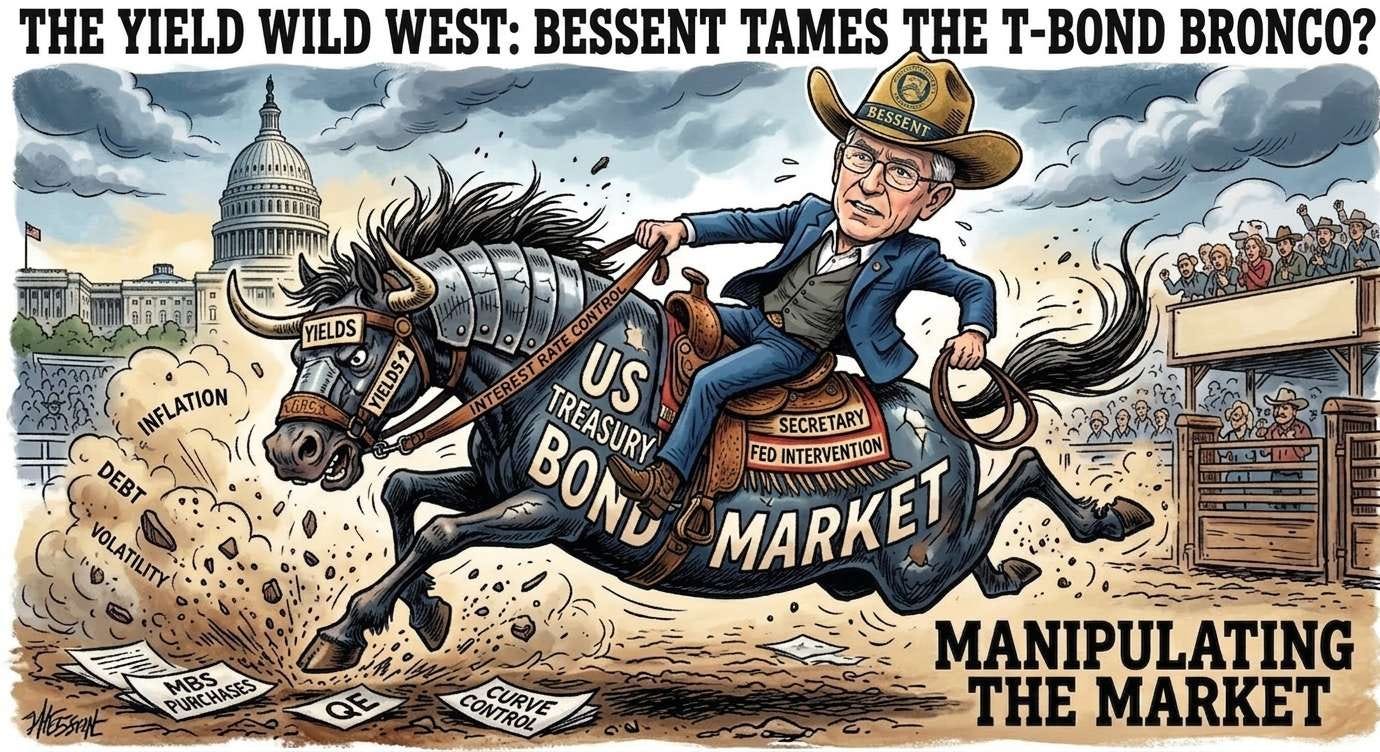
Treasury Secretary Scott Bessent is back trying to break a bond market that doesn’t want to be broken. On August 19, Treasury doubled the size of its debt buybacks, authorizing purchases of up to $4 billion at a time in 10- to 30-year Treasuries, in an open attempt to keep a lid on long-term interest rates.
Seems like a good time to revisit the debt markets. There are some things that might surprise you.
First of All, Are Interest Rates Too High?
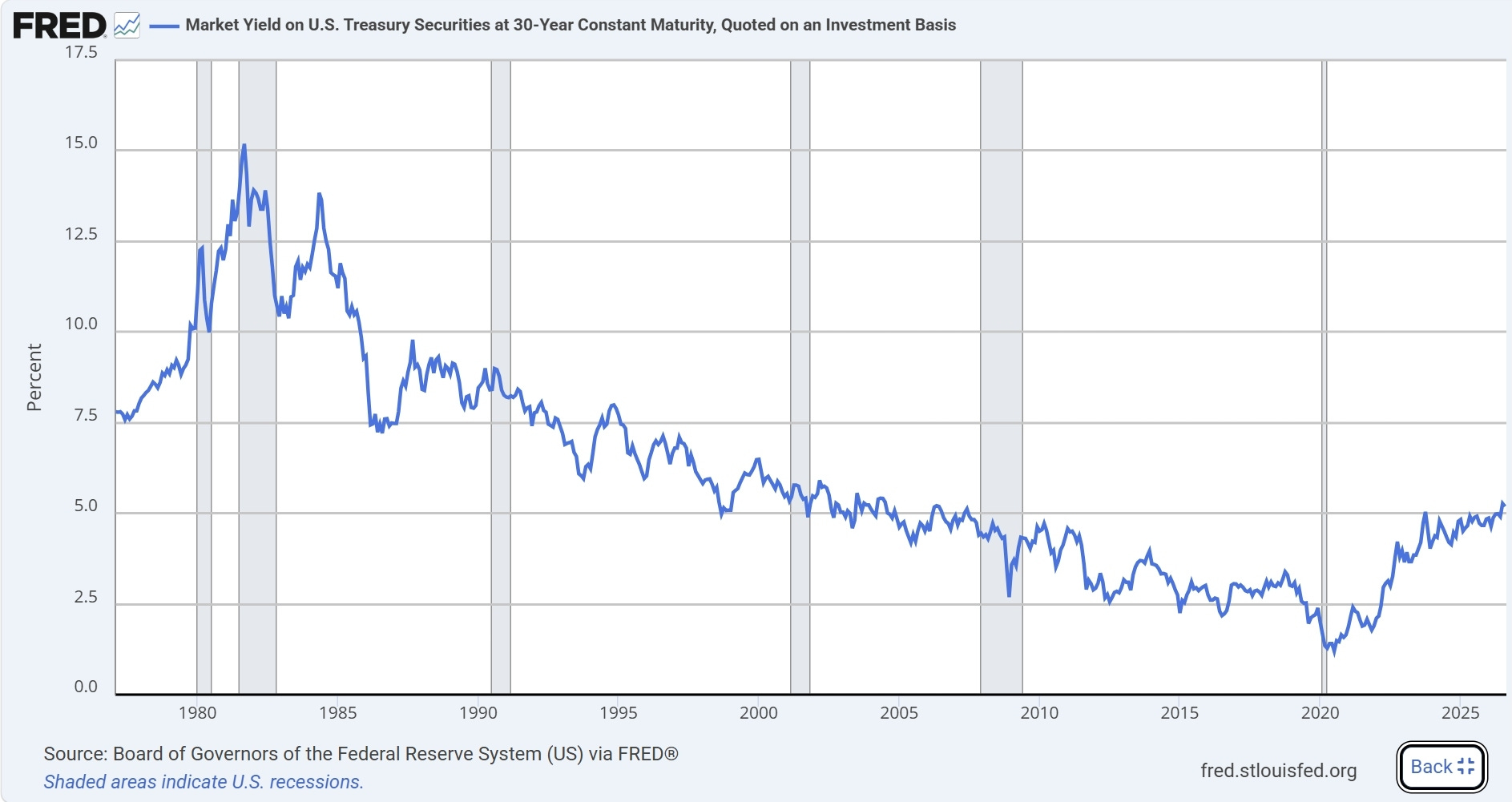
This is a plot of 30-year rates since 1977:
https://fred.stlouisfed.org/series/DGS30
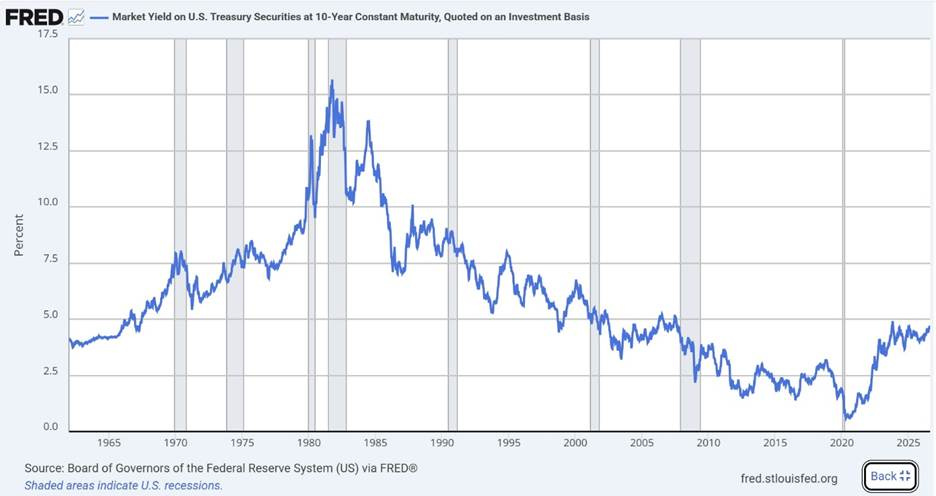
And because FRED (the Federal Reserve Bank of St Louis) has more data on the 10-year, here is a plot of 10-year rates since 1962:
https://fred.stlouisfed.org/series/DGS10
If you had gotten a mortgage back in 1985, like some of us here at Quislings, you’d know interest rates have been higher than today’s for much of the modern past - roughly 40 years, from 1965 to 2005.
How Did People Cope With Such High Rates?
Actually, fairly well. Average annual GDP growth from 1965 to 2005 ran about 3.3%. Since 2005, it’s averaged closer to 2.0%. The higher-rate decades weren’t the ones that dragged growth down. (https://data.worldbank.org/indicator/NY.GDP.MKTP.KD.ZG?locations=US)
One other oft-neglected effect back then: the interest banks paid was enough for many savers to actually save. Since then, it seems like everyone’s been pushed into riskier investments just to keep pace.
And Bessent?
Scott Bessent worked for the Soros funds back in 1992 and was reportedly the analyst who spearheaded the short British Pound trade that “broke the Bank of England,” netting the Soros fund $1 billion. (https://www.europesays.com/3201444/)
It’s possible that Bessent is a quisling genius. It’s also possible he didn’t learn a vital lesson from his hedge fund days: that countries can’t manipulate currencies and interest rates forever.
And Current Interest Rates?
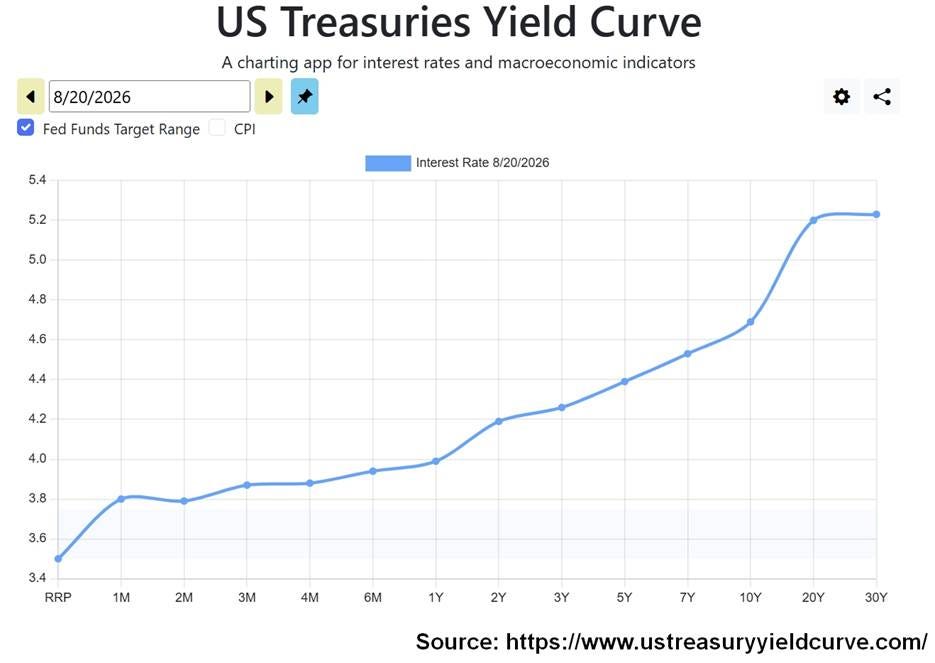
We’re a debtor nation. Bessent doesn’t have a pile of cash sitting around to buy those long bonds - he has to borrow it. Look at the yield curve below: right now you can borrow one-year money at about 4% and lend 30-year money at about 5.2%.
Can Bessent Actually Win This?
Buying up long bonds pushes their rates down, or at least keeps them from climbing further. But Bessent has to fund those purchases somehow, and Treasury doesn’t have spare cash lying around - so it sells more short-term debt to cover the buy. That floods the short end of the curve, and short rates rise instead. It’s less a fix than a shell game: rearranging where the pressure shows up.
The bigger problem is scale. Even after the August doubling, Treasury’s buybacks top out around $4 billion at a time - against a Treasury market worth roughly $30 trillion. One analyst put it plainly: this isn’t real intervention, it’s verbal intervention - closer to a rebranded Operation Twist (a similar gambit in 1961) than the kind of buying that could actually move a market this size. (axios.com/2026/08/19)
And the sellers are real. Foreign investors hold roughly $9.5 trillion of Treasury debt - about a quarter of all outstanding Treasury securities. China and Hong Kong combined are down to $962 billion, off more than a third from a decade ago and still shrinking. (wolfstreet.com, April 2026) Foreign holdings fell again in June, led by a pullback from Japan - still the single largest foreign holder. (bloomberg.com, Aug. 17) None of that reverses because Treasury buys back a few billion dollars of bonds on a Tuesday.
Governments that try to out-buy a bond market that has decided to sell don’t have a great record.
In September 2022, the UK’s mini-budget spooked gilt investors so badly that 30-year yields spiked and pension funds started to fail; the Bank of England had to launch a £65 billion emergency gilt-buying operation just to keep the system solvent. (bankofengland.co.uk) It bought time, not victory. The tax cuts were reversed within weeks, and the Prime Minister who proposed them was gone in 49 days. The market wrote that ending, not Downing Street.
Washington has been overruled by its own bond market before, too - no foreigners required. In 1994, a single Fed rate hike triggered a selloff that erased roughly $1.5 trillion in bond value worldwide in nine months. (Wikipedia, 1994 bond market crisis) Traders still call the people who did that “bond vigilantes,” and the lesson from 1994 is the same one Bessent should remember from his Soros days: credit markets answer to no administration.
None of this requires a conspiracy to explain why global investors have been trimming Treasuries and demanding more yield to hold the rest. The debt does the explaining on its own.
Social Security’s trust fund is now projected to run dry in 2032 - six years off - triggering an automatic benefit cut of roughly 22%. (cnbc.com, June 2026)
Interest on the federal debt already costs more than the Pentagon’s entire budget - and the active war with Iran, which has reportedly left Trump and Hegseth clashing over munitions shortages, is only adding to the bill. (washingtonpost.com, Aug. 5)
As recently as March, three Treasury auctions in a row showed the classic tells of fading demand: primary dealers were left holding nearly a quarter of one two-year auction, roughly double the usual share. (crfb.org)
Would you lend 30-year money to a borrower staring down that future?
Bessent may be back in the saddle. Whether the bronco lets him stay there is a different question.
For more on the debt and budget, see these prior articles:
Great information. I remember buying a condo in the 80's with a 17% mortgage.
Great article - very informative.