

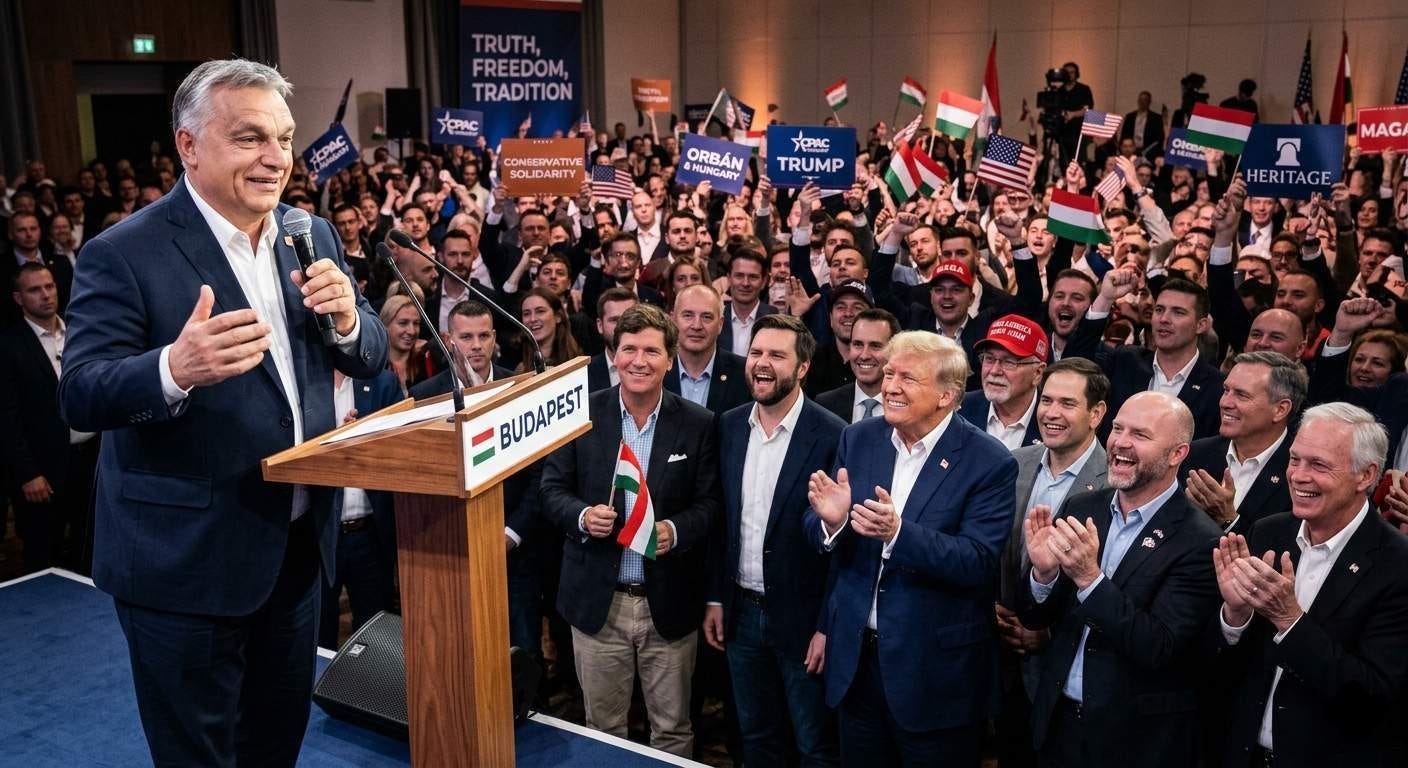
In Part One, we described what Viktor Orbán’s Hungary actually was - the corruption, the looting, the Putin phone calls, the zebras grazing behind the palace fence. If you haven’t read it, start there. Because this piece is about something different: not what happened in Hungary, but what it tells us about the Americans who were cheering from the stands.
Let’s start with Marco Rubio. Because Marco Rubio knew.
In 2019, Rubio was one of a group of U.S. senators who wrote a letter to President Trump warning him about Hungary. Democracy there, they wrote, had experienced “a steady corrosion of freedom, the rule of law and quality of governance.” Elections had become less competitive. The judiciary was “increasingly controlled by the state.” Press freedom was under threat. Rubio signed that letter. He knew what Orbán was.
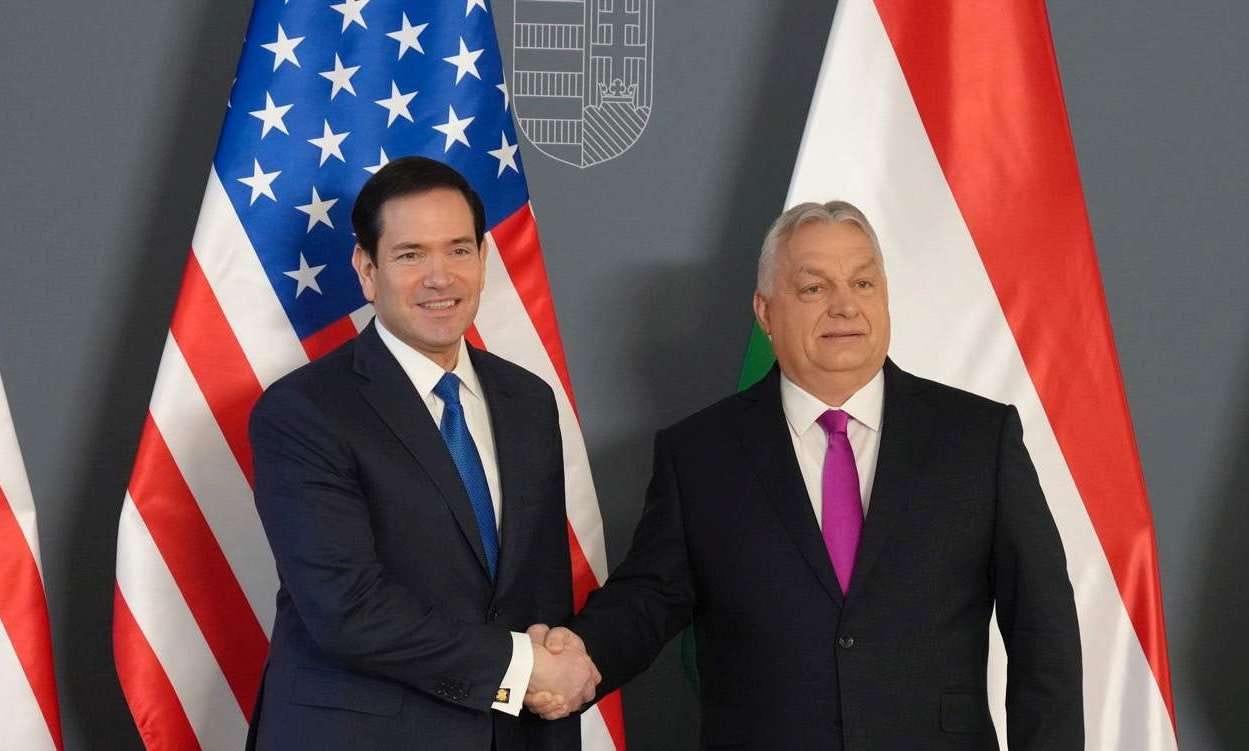
Fast forward to February 2026. Secretary of State Marco Rubio flies to Budapest. He stands next to Viktor Orbán at a joint press conference and says:
“I can say to you with confidence that President Trump is deeply committed to your success. It’s in our national interest, especially as long as you’re the prime minister and the leader of this country.”
Seven years. That’s how long it took for “steady corrosion of freedom” to become “our national interest.” Nothing changed in Hungary. Rubio changed.
He wasn’t alone.
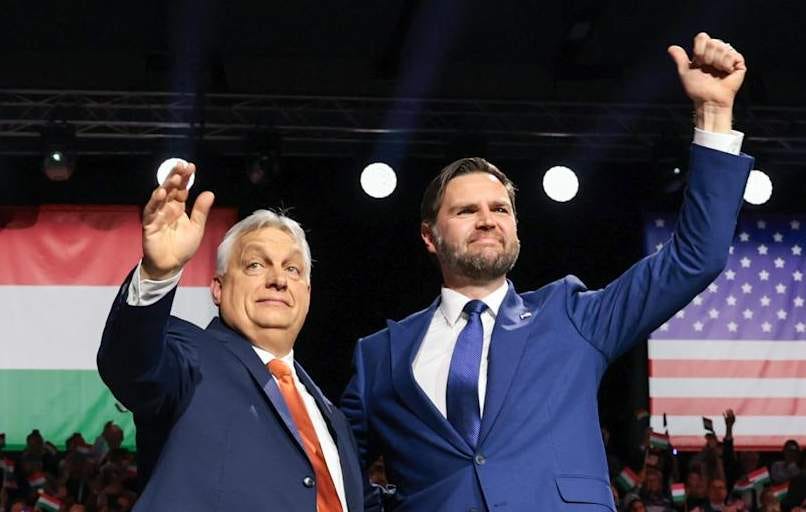
Five days before the Hungarian election, Vice President JD Vance flew to Budapest and stood on a stage at a rally. He held his phone up to the microphone and called Donald Trump, who picked up and told the crowd:
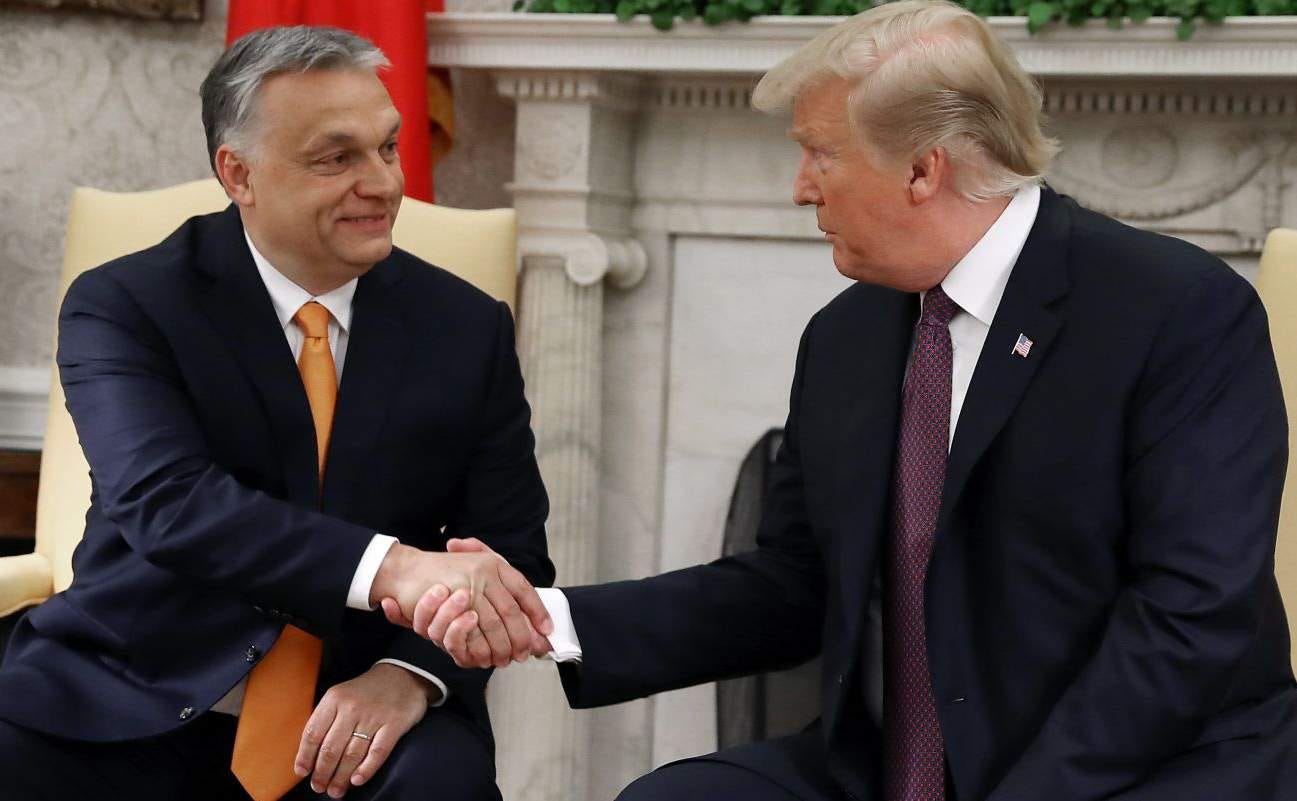
“I love Hungary and I love that Viktor.”
Vance told that same crowd:
“We have got to get Viktor Orbán reelected as prime minister of Hungary.”
And on the question of universities - Orbán had driven the Central European University into exile through a series of regulations specifically designed to make its continued operation impossible - Vance had said in 2024:
“The closest conservatives have ever gotten to successfully dealing with the left-wing domination of universities is Viktor Orbán’s approach in Hungary. I think his way has to be the model for us.”
That “approach” involved running a university out of the country. Vance called it a model.
Then there’s Kevin Roberts, president of the Heritage Foundation - the organization that produced Project 2025, the blueprint for the second Trump term. Roberts didn’t hedge. He didn’t qualify. He said:
“Modern Hungary is not just a model for conservative statecraft - but the model.”
Tucker Carlson broadcast his prime time Fox News show from Budapest and sat down with Orbán for a warm interview. Senator Ron Johnson of Wisconsin publicly praised Orbán’s approach to governing. And CPAC - the Conservative Political Action Conference, flagship event of the American right - set up a Hungarian franchise that ran for years.
We now know, thanks to Orbán’s successor Péter Magyar, that Orbán was using Hungarian government money to fund CPAC itself.
Read that again slowly.
American conservative activists were attending a conference bankrolled by a foreign government - one that was, as leaked recordings confirm, actively feeding European intelligence to Moscow and offering Putin its services as a useful mouse. The American right’s premier political gathering was, in part, a foreign influence operation. Aimed at them.
This is the part that Kim Lane Scheppele - perhaps America’s leading constitutional scholar on Hungary, writing and speaking about this since 2010 - finds most chilling, as she explained to Paul Krugman in a conversation worth reading in full. The Orbán system, she argues, was a dictatorship constructed entirely through legal and technical means. Incremental. Procedural. Almost impossible to see until it was already done.
It doesn’t look like tanks in the streets.
It looks like firing civil servants and replacing them with loyalists. It looks like cutting state advertising to independent media until the outlets can’t pay their bills. It looks like packing courts with younger, more compliant judges. It looks like redrawing election districts so your voters count three times as much as theirs. Each step looks defensible in isolation. By the time the picture comes into focus, it’s already a very different country.
Trump’s return to office has featured:
mass firings of career civil servants.
Threats to pull federal funding from non-compliant universities and law firms.
Pressure on independent prosecutors.
Sustained attacks on the press.
And throughout it all, a reverence - expressed in quotes, in rallies, in transatlantic flights - for the man who wrote the playbook.
Three weeks before the Hungarian election, Trump recorded a video message for CPAC Budapest:
“I am endorsing his election... he has my complete and total endorsement.”
Three weeks later, Hungarians threw Orbán out in a landslide.
Which brings us to the only hopeful note in this story - and it matters.
Orbán rigged his system specifically so that he thought he couldn’t lose. Rural votes counted three times as much as urban ones. The courts were his. The media was his. He invited a Russian disinformation team to relocate to Budapest in the final weeks of the campaign to flood Hungarian Facebook feeds with bots. He had every structural advantage that sixteen years of patient consolidation could buy.
He lost anyway.
Because enough people had seen enough. The zebras. The hospitals. The Putin tapes. The friends who got rich while everyone else got poorer and sicker. Magyar went to the villages, told the truth, and let people discover they weren’t alone in what they were seeing. The fear went away as the crowds grew.
Scheppele ended her conversation with Krugman with a line we keep coming back to:
“We can do that here, right? We can do that.”
The Americans who called Hungary a model were paying very close attention to how Orbán built his system. What they saw - and cheered - tells you everything you need to know about what they want to build here.
Coming next:
"Supreme Policy" Things that have happened. You decide what to call them.
The USA is waking up. Even the most staunch of Trump loyalists will wake from his nightmare, many may go to jail.