

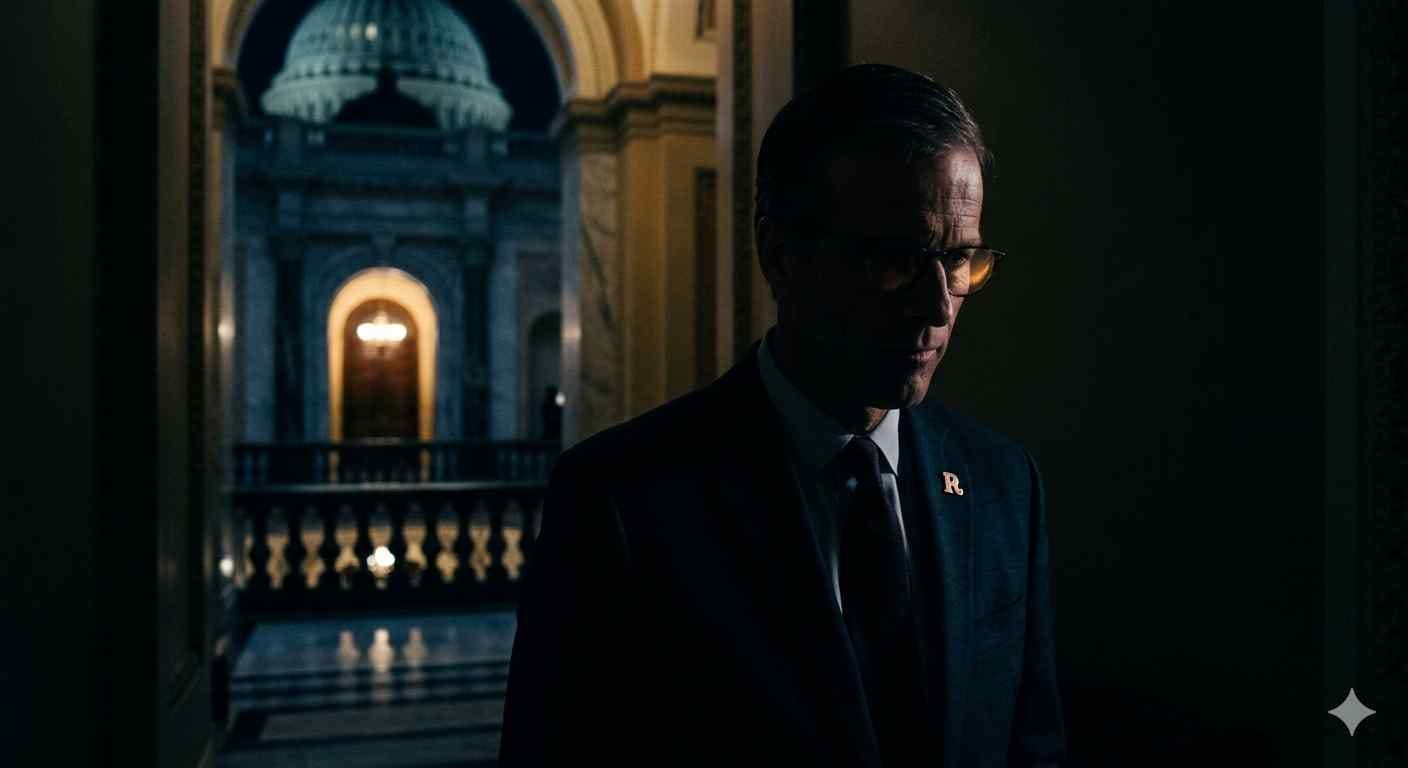
John Thune became Senate Majority Leader in January 2025 with a promise to restore institutional order. He positioned himself as the steady hand - the “grown-up in the room” who would check executive overreach, defend Senate prerogatives, and ensure deliberative oversight of foreign policy.
Fifteen months later, that promise is in ruins. Thune has presided over the most erratic period of American foreign policy in a generation - not by resisting it, but by saying nothing at all.
Governance by Social Media
The current Iran crisis is the clearest example. Since the outbreak of hostilities in late February, the administration has lurched from a 40-day bombing campaign to threatening “civilizational destruction” to, just this week, agreeing to a tentative two-week ceasefire. These seismic shifts have been conducted primarily through Truth Social posts and notifications from the White House App rather than traditional diplomatic or congressional channels.
This is not hyperbole: the nation’s entry into a hot war, and the terms of the fragile April 8th truce, were announced first via personal social media, forcing the Pentagon and State Department to scramble for clarification after the fact.
Thune’s response? Silence. No press conference. No floor speech. No demand for briefings. No insistence that policy of this magnitude be presented to the Senate before being broadcast to the world. The Majority Leader - the man constitutionally empowered to demand consultation on matters of war and peace - stood by as coherent strategy dissolved into real-time executive improvisation.
The Vanishing Institutionalist
This abdication is particularly striking because Thune spent years demanding the executive branch answer to the Senate. In 2015, he co-sponsored legislation to give Congress a veto over the Iran nuclear deal. Even in 2020, while defending the strike on Qasem Soleimani, he maintained the rhetorical stance that any extended conflict would require a "fulsome discussion" about the role of Congress and the necessity of Senate consultation. He built a career on the idea that the Senate is not a rubber stamp.
The man who once insisted the Senate be briefed before military strikes now tolerates Middle East policy conducted by the President's son-in-law Jared Kushner - who holds no official government office - and Special Envoy Steven Witkoff, a real estate developer whose family maintains extensive business ties across the region. When war and peace are negotiated by a private citizen and a personal friend while the Senate is sidelined, the advice-and-consent role has been rendered meaningless. Thune has allowed it without objection.
A Pattern of Surrender
The pattern extends far beyond Iran:
Trade: When the administration announced sweeping tariffs with no interagency review, Thune issued a tepid statement about “concerns” and returned to silence.
Military Leadership: When the President fired multiple combatant commanders via social media, Thune declined to hold hearings on whether dismissing theater commanders without consultation violated constitutional norms.
The Power of the Purse: When emergency declarations were invoked to bypass congressional appropriations, Thune allowed the maneuver without forcing a floor vote.
In each case, the issue isn’t partisan disagreement - it is institutional collapse. The Senate’s authority exists precisely to prevent governance by impulse. Thune’s silence doesn’t just enable bad policy; it normalizes a presidency conducted through an app rather than a constitutional process.
The Fiction of “Behind the Scenes”
The excuse that he is “working behind the scenes” is a fiction. When Mitch McConnell disagreed with executive action, he forced floor votes. When Bob Dole objected to foreign policy overreach, he held public hearings. When Howard Baker challenged presidential authority, he demanded answers on camera.
Institutional power isn’t defended in whispered hallway conversations; it is defended by making the executive branch explain itself to the public.
Thune campaigned for leadership by promising he would be a bulwark against chaos. He told his colleagues the Senate would be a co-equal branch again. Instead, he has presided over its surrender.
The Verdict
History will record that John Thune held the Senate gavel at the moment when American foreign policy could have been pulled back from the brink of governance by impulse. He chose silence instead. The decision that avoiding confrontation was more important than checking executive power now defines his tenure.
The Senate has been reduced to a spectator. And Thune handed it the ticket.
Another great post. You make their silence very loud.
These posts need a wide audience.