
The DC Seventeen
Paving the Way for the Quislings

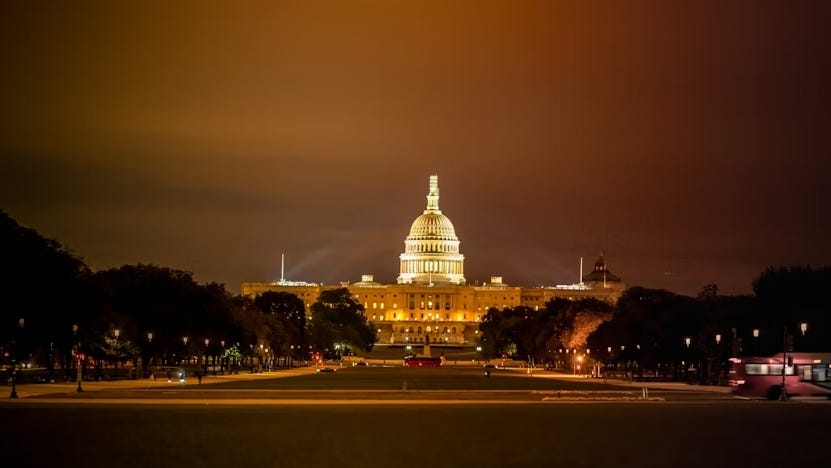
On the night of January 24, 2025 - the first Friday after inauguration - President Trump removed 17 Inspectors General in a coordinated sweep across the federal government.
Inspectors General are not typical political appointees. They are statutorily created watchdogs embedded inside agencies to sniff out the fraud, waste, abuse, and misconduct that inevitably follows trillions of dollars in taxpayer spending. They audit contracts, investigate self-dealing, protect whistleblowers, and issue public reports to Congress.
In 2024 alone, IG offices reported identifying more than $50 billion in potential savings and recoveries. Historically, they return roughly $15–$20 for every dollar invested in them. That is not bureaucratic overhead. It is enforcement infrastructure.
The firings reached across the core machinery of government - Defense, State, HHS, Agriculture, Veterans Affairs, Social Security, EPA, Transportation, Interior, Labor, HUD, Energy, Commerce, SBA, Education, Treasury, and NASA.
Among those removed was Hannibal “Mike” Ware of the Small Business Administration, who also chaired the Council of the Inspectors General on Integrity and Efficiency (CIGIE) - the body that coordinates IG standards, peer review, and federal whistleblower systems, including Oversight.gov.
Removing an agency watchdog is significant. Removing the coordinating chair of the oversight community sends a broader signal.
In the months that followed, reports indicated funding uncertainty and operational disruption affecting CIGIE functions. Even temporary instability in oversight systems chills reporting. Whistleblowers hesitate when they are unsure who is listening.
This was not housekeeping. It was structural.
The Failed Legal Guardrail
Under the Inspector General Act - strengthened by the 2022 Securing Inspector General Independence Act - the president must provide Congress 30 days’ notice before removing an IG, along with substantive reasons for the dismissal.
In these cases, notice followed the removals.
Six months later, in September 2025, a federal court ruled that the administration had failed to comply with the statutory 30-day notice requirement. But the court stopped short of reinstating the IGs, noting that the president could lawfully remove them if proper notice were given.
The ruling affirmed the procedure while acknowledging the limits of judicial intervention against executive removal authority.
The law provides process. It does not guarantee compliance.
Who Benefits When Watchdogs Are Weakened?
Oversight does more than uncover misconduct. It deters it.
Agency heads, political appointees, and contractors operate differently when they know independent auditors may later review the emails, the contracts, and the flight logs. That awareness shapes behavior. Remove or destabilize it, and incentives shift.
Not automatically toward illegality - but toward greater discretion.
Political Power Without Independent Friction
In the months surrounding the purge, public reporting raised questions about senior officials’ use of government aircraft and other taxpayer-funded resources in ways that blurred the line between official duty and political activity. Some trips were defended as legitimate. Others prompted ethics scrutiny and media investigation.
Whether any specific instance violated federal law is for investigators to determine. The broader point is institutional: when offices responsible for auditing travel, procurement, and security compliance are removed or weakened, the deterrent effect narrows. Gray areas widen.
Oversight does not merely catch misconduct. It reduces temptation.
Contractors and Sensitive Reviews
Several dismissed IG offices had active audits or evaluations related to defense contracts, space launch services, pandemic-era relief funds, and infrastructure spending involving politically influential firms.
There is no public evidence tying specific removals to specific investigations. But when watchdogs examining sensitive contracts are eliminated in a single coordinated action, the message travels - through agencies, through contractors, and through the civil service.
Scrutiny is not guaranteed. It is contingent.
Enforcement Priorities Matter
At the same time, federal enforcement priorities shifted. Public statements in 2025 indicated reduced emphasis in certain white-collar enforcement areas, including corporate bribery cases under the Foreign Corrupt Practices Act, while significant investigative resources were reassigned to border-related missions.
No law was repealed. But enforcement intensity shapes compliance behavior. When the perceived likelihood of review declines, risk tolerance rises.
That is not a partisan observation. It is basic regulatory economics.
Statutory Oversight vs. Executive Initiatives
Simultaneously, the Department of Government Efficiency (DOGE) was granted broad access to agency data and internal systems.
Inspectors General are structured by statute to operate independently of the political leadership they oversee. They issue public reports, notify Congress, and are (supposedly) protected from removal without explanation. DOGE operated outside that statutory framework and with far less built-in transparency.
Inspectors General answer to the law and to Congress. DOGE answered to the White House.
That contrast matters.
The Benefit to Those We Call “American Quislings”
Inspectors General exist to make power slightly uncomfortable. They slow decisions, demand documentation, and create the possibility of exposure.
Remove them, and the discomfort fades.
What remains is discretion - and the very human temptation to enjoy it. In that environment, loyalty carries fewer risks. Privilege faces fewer constraints. Enabling becomes easier to justify.
That is the benefit.
And once power grows accustomed to operating without scrutiny, it rarely volunteers to restore it.
Notes
The “DC Seventeen” was politically diverse: 8 were Biden appointees, 6 were Trump appointees from his first term, 2 were Obama appointees, and 1 was originally appointed by George W. Bush.
Following the purge, the administration temporarily withheld funding from CIGIE, which hosts the centralized federal whistleblower hotline and Oversight.gov. The result was that for a period in 2025, the digital infrastructure used by federal employees to report “gross mismanagement” and “abuse of authority” was effectively dark or unmonitored.
We have been asked why we're talking about this a year after it happened. The issue is that it was the first step in erasing the culture of accountability in the executive branch. A year later, we are seeing the symptoms: allegations of using government assets to attend the Olympics; Kristi's "dream plane" etc.