

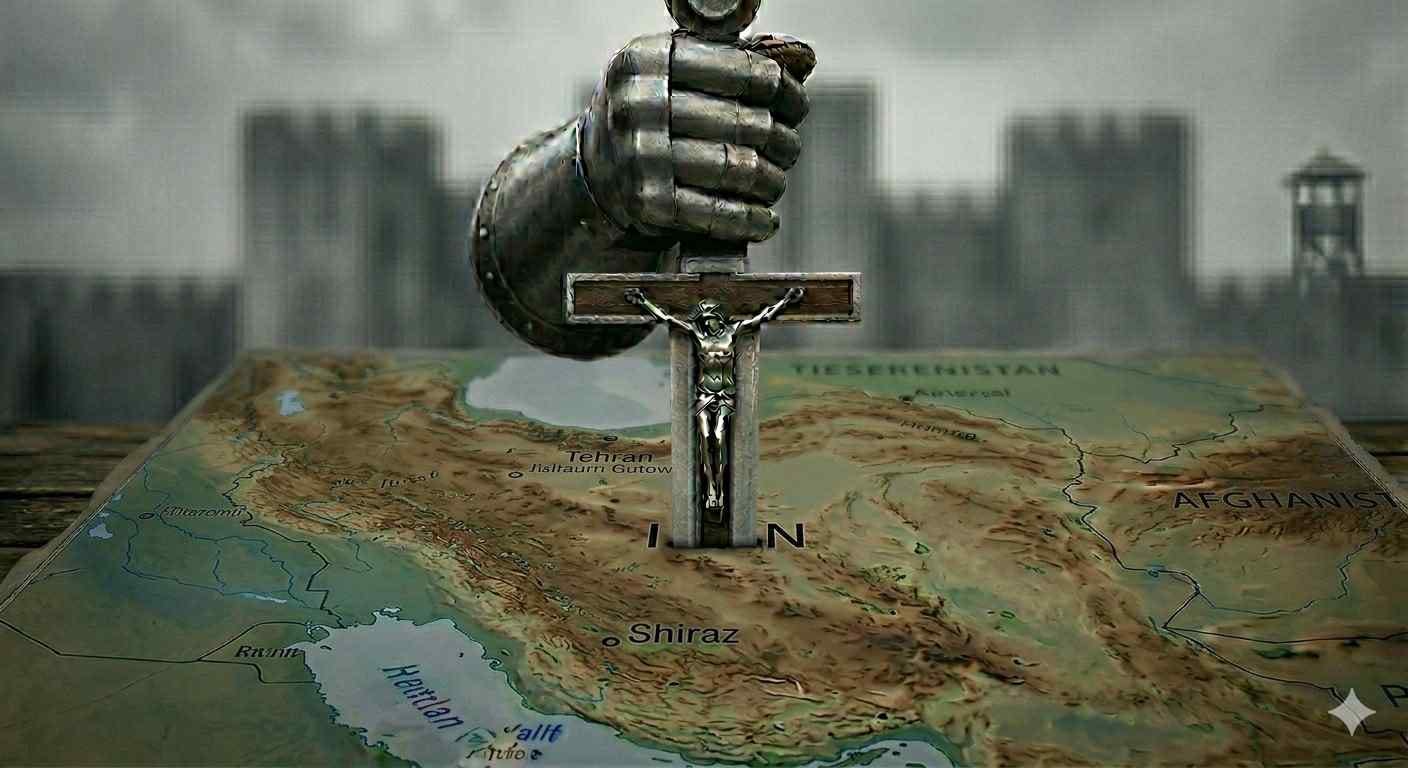
In our earlier post titled “The Priest and the President,” we examined the symbolic fusion of the pulpit and the podium - the way a leader can use faith as a shield. In the weeks since, that shield has been sharpened into something else entirely. We are no longer observing a President who presents himself as a chosen figure. We are witnessing an administration that has brought that logic into the war room.
The shift deserves a closer look...
Begin with a moment of contrast. In 1865, Abraham Lincoln stood before a fractured nation and offered something rare in the history of executive power: genuine theological humility.
“Both read the same Bible, and pray to the same God; and each invokes His aid against the other.”
Lincoln declined to assign God to either side, noting instead that “the Almighty has His own purposes” - purposes that may not align with the desires of any president or general. For Lincoln, the appropriate posture before a God of judgment was not confidence, but caution.
That posture has not always been perfectly maintained by American leaders. Franklin Roosevelt blessed Allied troops. George W. Bush spoke of a “crusade” after September 11th - a word he quickly walked back when its implications became clear. Wartime presidents reach for the language of Providence. That is not new.
What Secretary of Defense Pete Hegseth is doing at the Pentagon is something very different.
On March 26th, Hegseth hosted his first monthly Christian worship service since the United States began its war against Iran. The service was livestreamed to Pentagon civilian employees and uniformed military personnel. Hegseth read from a prayer he said was originally delivered by a military chaplain before the operation to capture Venezuelan President Nicolás Maduro in January - and applied it now to the troops in Iran.
The prayer read, in part:
"Almighty God, who trains our hands for war and our fingers for battle... make their arrows like those of a skilled warrior... let every round find its mark against the enemies of righteousness and our great nation. Give them... overwhelming violence of action against those who deserve no mercy...”
He concluded:
“We ask these things with bold confidence in the mighty and powerful name of Jesus Christ.”
These are not the words of a leader asking for God’s guidance. They are the words of a leader who speaks as though God’s judgment is already settled - and has sent Him an assignment.
The distinction matters. Lincoln’s God was a judge whose purposes were not ours to assume. Hegseth’s God is, in effect, a precision munitions officer.
Hegseth belongs to the Communion of Reformed Evangelical Churches, a network co-founded by self-described Christian nationalist Doug Wilson, who has preached at the Pentagon. The CREC’s theology holds, in Wilson’s formulation, that all earthly authority is subordinate to biblical law as his tradition defines it. If you accept that framework, then secular constraints - congressional oversight, the laws of war, the constitutional separation of church and state - are not binding obligations. They are minor inconveniences beneath a higher mandate.
Hegseth does not operate in isolation. This Easter season, the President declared that "to be a great nation, you must have religion, and you must have God" - and then threatened, in his own words, that “a whole civilization will die tonight, never to be brought back again.” The juxtaposition is not incidental. It is theology made operational: providential favor justifies overwhelming force, and those who question it are, by implication, questioning God’s will.
It is worth noting who has offered the clearest counterpoint to this theology - and from where.
Pope Leo XIV, in a Palm Sunday homily, stated directly that Jesus “rejects war, whom no one can use to justify war.”
When Trump threatened to annihilate Iranian civilization, the Pope declared the threat “truly unacceptable” and a violation of international law. The contrast with Hegseth’s prayer - delivered the same week - could not be more deliberate or more stark. A single Catholic pontiff found himself publicly rebuking both the Secretary of Defense and the President of the United States for the same offense: commandeering God for the purposes of war.
Lincoln refused to claim God’s endorsement because he understood the danger of that claim: a republic that equates its political decisions with divine will has found a way to place itself beyond accountability. The current administration appears to be testing whether that equation holds.
As the prayers rise and the missiles fly, the question Lincoln understood - and Hegseth does not appear to have asked - remains open: what happens to a nation when it stops seeking God’s judgment and starts issuing orders in His name?
Prior installment on this subject: The Priest and the President - hawkeye1972.substack.com/p/the-priest-and-the-president
Indeed very well written and especially just shocking!
Hawkeye,
This is so well written. As a Christian, and one who opposes war, I find the words of the Pope to be what I believe Jesus would say at this critical moment. Thank you for your insightful article.