

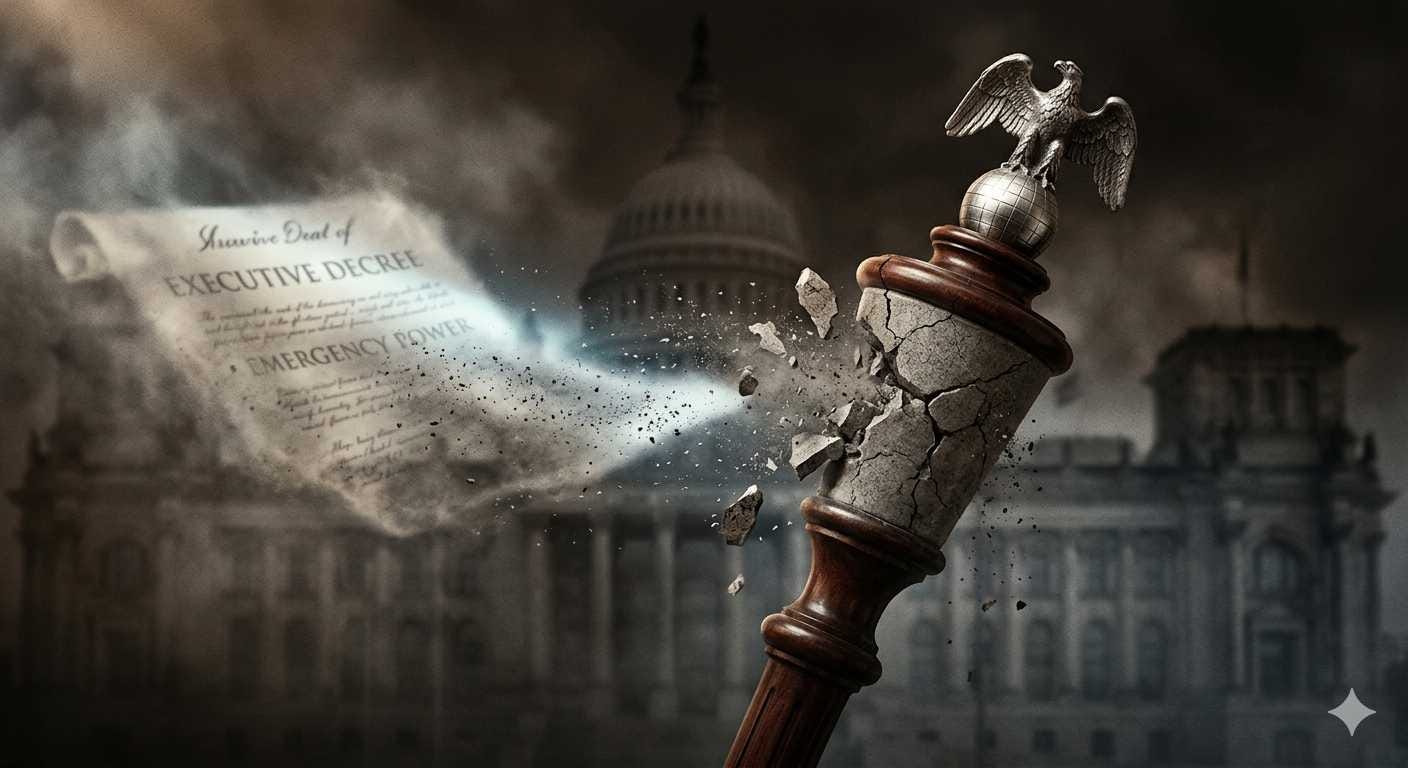
Democracies rarely die in darkness. They die in well-lit rooms, with recorded votes and polite applause.
On March 23, 1933 - 93 years ago this week - the German Reichstag did not have power seized from it. It voted to give it away. The Enabling Act of 1933, formally titled the “Law to Remedy the Distress of People and Reich,” passed with the required two-thirds majority and ceded the Reichstag’s power to the Fuhrer. The lights were on. The votes were recorded. The applause came.
The question is not whether the United States is Germany in 1933. It is not. The question is whether we are becoming more comfortable with the same governing shortcuts.
The Architecture of Emergency
The collapse of the Weimar Republic was not driven by a single act of ambition. It was built, step by step, through the normalization of emergency.
The precondition was Article 48 of the Weimar Constitution - a provision allowing the president to rule by decree in a genuine crisis. It was designed to be exceptional. It became habitual. The Reichstag, paralyzed by polarization, found it easier to cede authority than to exercise it. Governing by decree was faster than governing by consensus. And then faster became normal.
The United States has its own Article 48.
The National Emergencies Act of 1976 was designed for genuine crises requiring temporary executive flexibility. Fifty years later, there are over 50 national emergencies still active - some dating to the 1970s and 1990s. What begins as contingency becomes convenience. What becomes convenience becomes precedent.
Jimmy Carter's 1979 Iran hostage crisis declaration that began in 1979 over hostages who were released in 1981 is still technically active today.
The Sunset That Never Came
The German Enabling Act was sold as temporary. It included a four-year sunset provision - a reassurance that once the crisis passed, authority would return to the Reichstag.
It never did.
The US Authorization for Use of Military Force, passed after September 11, 2001, was intended for a specific conflict against specific actors. It is still active law. It has been used to authorize military actions in countries not named in the original legislation, against groups that did not exist when it passed, in contexts its authors could not have foreseen.
Temporary powers, once granted, rarely return. The sunset clause was a promise. Promises are easier to make than to keep.
Efficiency Is Always the Argument
The central case for the Enabling Act was simple: the Reichstag was broken. Gridlocked. Ineffective. Unable to act in a crisis. Hitler promised that concentrated authority would produce results.
It did - just not the kind that a republic survives.
We hear the same diagnosis today. Congress is slow. Dysfunctional. So when a president bypasses it - with an executive order, an emergency declaration, a budget impoundment - there is often relief, even applause. Something happened. Something got done.
But that relief has a price.
Efficiency is always the argument for concentrated power. It is rarely the outcome.
The Power of the Purse - Again
There is a deeper parallel, and it connects directly to what we wrote recently about congressional appropriations.
When the Reichstag voted to give Hitler authority over budgets and treaties, it did not merely hand over the money. It removed the legislature’s reason to exist. The power of the purse is not a procedural technicality. It is the mechanism by which a representative body shapes policy, constrains the executive, and remains relevant to the people who elected it.
When a legislature treats that responsibility as a burden to be offloaded - through emergency declarations, expansive executive orders, or simple inaction - it is not becoming more efficient. It is becoming less necessary.
No legislature votes to become irrelevant. It happens one temporary measure at a time.
The votes continue. The lights stay on. The applause still comes.
But the power is gone.
If this matters to you, send it to someone who needs to read it.
Hawkeye, another well written and very relevant article regarding the state of our democracy, and the unchecked power being granted to one incompetent individual and his band of un-qualified clowns.